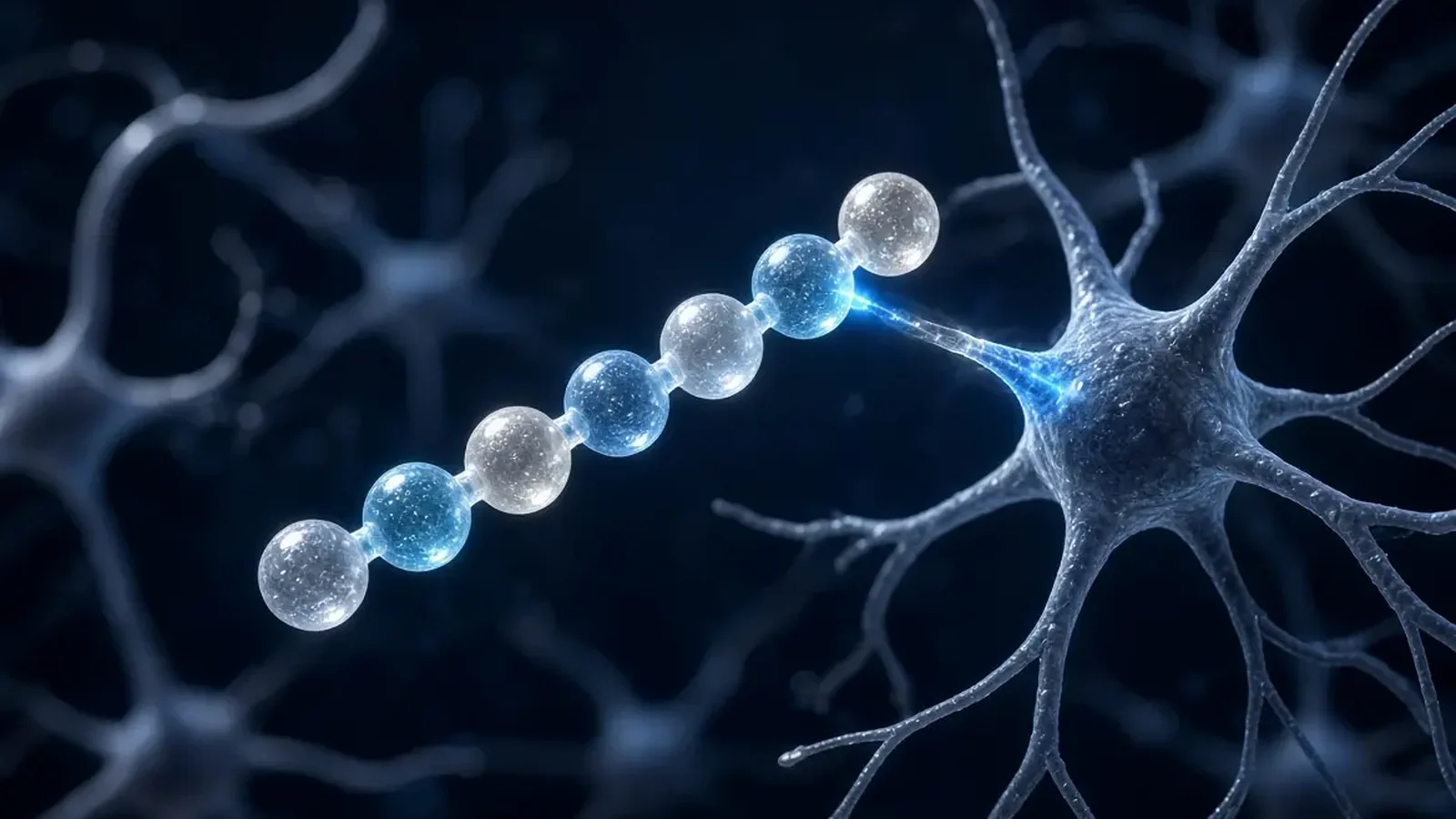
What Is Oxytocin? Hormone Functions, Peptide Uses, and How It Works in the Body

By Jeff NunnPublished · Updated · 14 min read
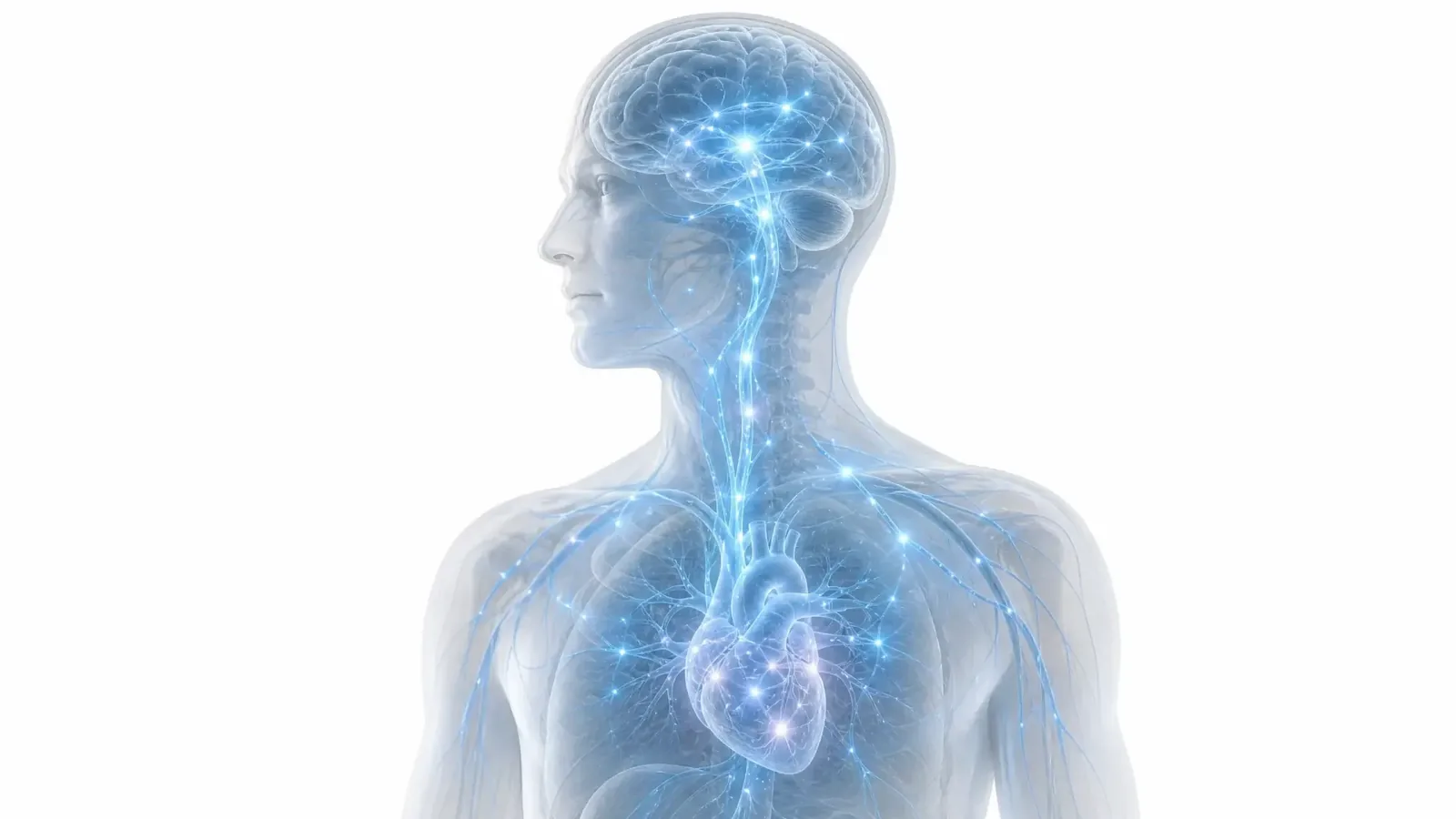
Learn what oxytocin is, what oxytocin does, where it’s produced, and how oxytocin peptide is used clinically and in research plus dosing, intranasal sprays, and safety.
Oxytocin peptide is a nine-amino-acid neuropeptide your body makes in the hypothalamus and releases from the posterior pituitary gland. Most people know it as the "bonding hormone," but that label barely covers what this small peptide does across social behavior, stress, reproduction, appetite, and even pain. This guide covers what oxytocin peptide does, how it works, what the research shows, how it is used intranasally, and the side effects that matter most.
What oxytocin peptide is and what it does
Oxytocin is a nonapeptide, a molecule built from a chain of nine amino acids. Your body makes it in the hypothalamus, inside large neurons in two clusters called the paraventricular and supraoptic nuclei. Those neurons run down to the posterior pituitary gland, which stores the peptide and releases it into the blood.
It plays two roles at once:
- As a hormone, it travels in the blood and acts on the uterus and the mammary glands.
- As a neuropeptide, it acts inside the brain on circuits tied to social behavior, reward, appetite, and stress.
The oxytocin used in hospitals is a synthetic copy of this same peptide, given by IV to start or strengthen labor and to control bleeding after birth. That clinical use is tightly controlled, and it sits apart from the experimental, off-label interest that draws biohackers to oxytocin as a peptide. If you are new to the category, our primer on what peptides are covers the basics, and peptide therapy explains how these compounds get used more broadly.
How oxytocin peptide works in the body and brain
The split between a body hormone and a brain signal starts at the receptor.
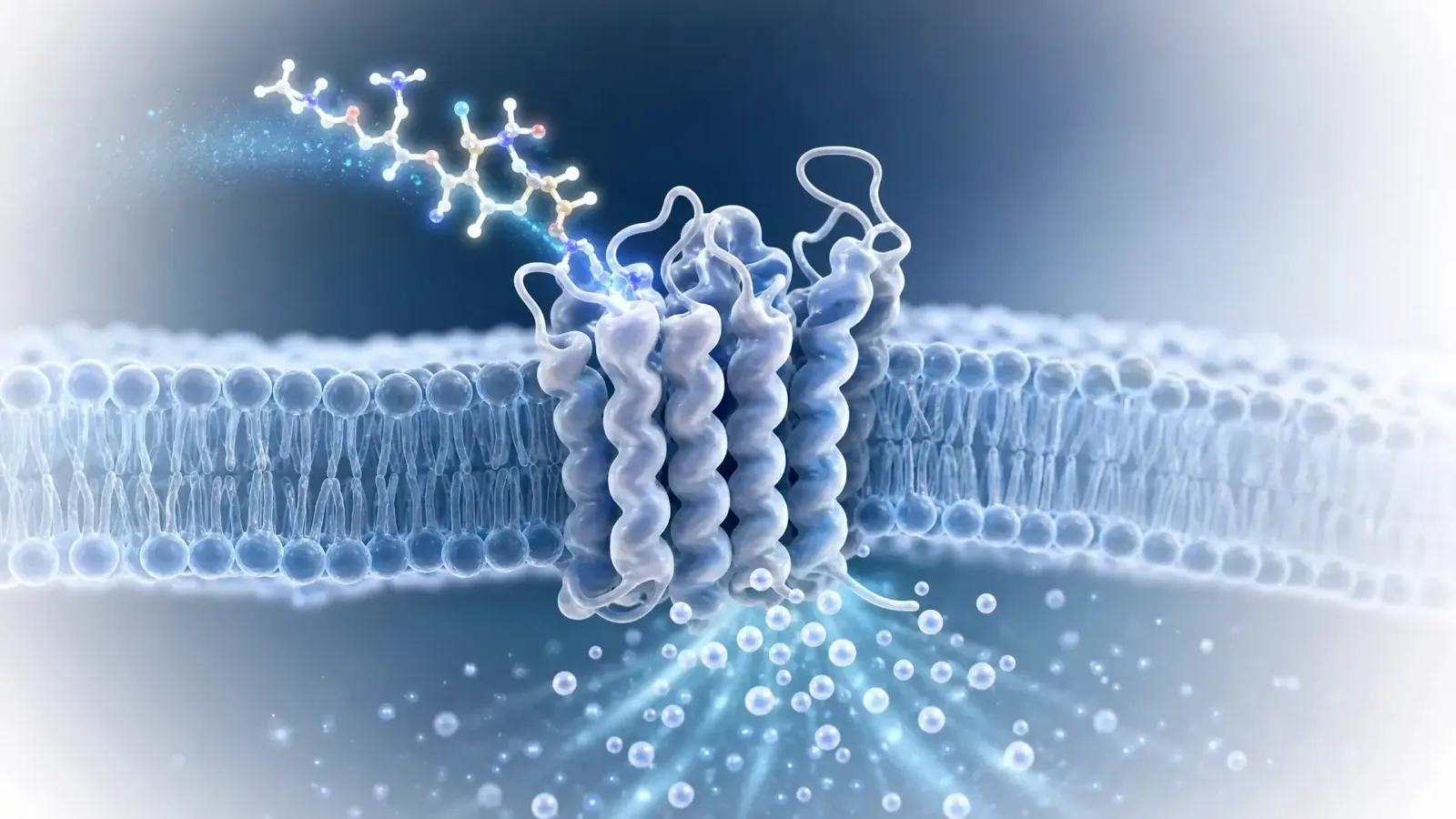
Oxytocin binds the oxytocin receptor, a G-protein coupled receptor. Once it binds:
- The receptor switches on an enzyme (phospholipase C) that makes a messenger called IP3.
- IP3 releases calcium stored inside the cell.
- That rise in calcium makes smooth muscle contract, which drives uterine contractions in labor and milk let-down during breastfeeding.
In the brain, oxytocin works differently. It shifts activity in regions like the amygdala and the nucleus accumbens, which handle emotion and reward. That is the basis for its reputation around trust, empathy, and reading social cues.
What triggers oxytocin secretion
Oxytocin secretion is not constant. The body releases it in response to specific cues:
- Labor and suckling, through positive feedback loops that keep the signal building until birth or milk release is complete.
- Social touch and emotionally charged moments.
What oxytocin peptide research shows
Knowing the mechanism is not the same as knowing the effect, and the evidence is stronger in animals than in people.
Intranasal oxytocin in human studies
Most human work uses a single intranasal dose and measures social cognition. Across these studies:
- Oxytocin has been linked to better emotion recognition, more empathy, and higher trust on some tasks [1][2].
- A systematic review of intranasal oxytocin studies in healthy adults found improvements in most studies at the standard dose, but divergent findings too, and effects strongly moderated by individual and contextual factors [1].
- The response is not linear. Some studies suggest lower doses can work as well as or better than higher ones, but few studies compare doses directly, so the dose-response is unclear.
Oxytocin in mice, voles, and other animals
The clearest mechanistic picture comes from ethology, the study of animal behavior. Across mammals, oxytocin shapes how animals recognize, bond with, and communicate with each other:
- Oxytocin knockout mice from two independent lines showed a normal preference for social novelty, with minor exceptions [4].
- Prairie voles form long-term attachments to mating partners, and many drug studies show oxytocin receptor signaling is critical for this, yet voles bred without the receptor still preferred their mating partners over a stranger [10]. The montane vole, a less affiliative species, shows little oxytocin receptor binding in areas such as the nucleus accumbens, where prairie voles have high receptor density [11].
- Sheep are a classic model for maternal bonding, where a surge of oxytocin around birth helps a ewe learn and bond with her lamb.
- Knockout results are mixed: two separate lines of mice bred without oxytocin showed normal social approach and a normal preference for a new mouse over a familiar one, which the authors read as a specific role in social memory. In autism mouse models, switching on oxytocin receptor neurons in one brain region restored impaired social memory [5].
Almost all of the deep mechanistic data comes from animals, from mice and rats to voles, sheep, and monkeys, not from people. The jump from an animal model to a human is not small, and it is the main reason human results look weaker than the rodent picture.
Oxytocin and mental health research
Because oxytocin shifts social perception, researchers have studied it in conditions where social or emotional signaling is affected. That work spans autism, schizophrenia, generalized social anxiety, and alcohol use disorder, where early trials in patients have looked at whether oxytocin changes social skills, fear responses, or craving. The results are early and often conflicting, which is the honest state of this evidence.
Oxytocin peptide beyond social bonding
Oxytocin's reach goes past bonding, which is why interest in it keeps widening into appetite, muscle, and pain.
Appetite, eating, and metabolism
Oxytocin helps regulate appetite, eating behavior, and body weight, and it interacts with how the body handles blood sugar.
- Prader-Willi syndrome involves a deficit of oxytocin-producing neurons. In a 24-child crossover trial, intranasal oxytocin was favored over placebo but not significantly, and carbetocin, an analog, showed no efficacy over placebo in the 12-week COMPASS PWS study [6][12][13].
- Oxytocin is also being studied for its effects on metabolism, including insulin resistance and glucose regulation, though this work is early.
Muscle maintenance and aging
One widely cited study found that plasma oxytocin levels decline with age, and that systemic oxytocin improved muscle regeneration by enhancing aged muscle stem cell activation and proliferation [7]. The authors linked a genetic lack of oxytocin to early sarcopenia, the age-related loss of muscle. This is animal data. It says oxytocin physiology touches tissue repair, not that a nasal spray rebuilds muscle in people.
Headache and craniofacial pain
Oxytocin receptors sit on nerves in the trigeminal system, which carries pain from the face and head. In lab studies, trigeminal nerve cells carried oxytocin receptors and were inhibited by oxytocin, which also inhibited their release of CGRP [8].
- Intranasal oxytocin trials in episodic migraine did not meet their primary endpoint of pain relief at 2 hours, but a one-month open label study reported fewer headaches in chronic and high frequency episodic migraine [8][14].
- A proprietary intranasal oxytocin, TNX-1900, was tested as a daily nasal spray in a phase 2 chronic migraine trial that finished in 2023.
This is an active but early area, not a settled use.
How to use oxytocin peptide: intranasal delivery and doses
Human studies have mostly given oxytocin intranasally, since it may partly enter the brain directly that way, and an oromucosal route is also being studied [15].
The nose offers a path that partly bypasses the gut and may carry some oxytocin toward the brain. It is not efficient. One study found nasal oxytocin bioavailability of 0.7 percent, with large person-to-person variability in plasma oxytocin after intranasal dosing [17].
In the research literature:
- Most studies in healthy adults used a standard dose of 24 IU, within a studied range of 1 IU to 48 IU [1].
- Published trials in healthy adults have used roughly 1 IU to 48 IU.
- These are study doses, not a protocol and not a recommendation, and the non-linear response means a bigger number is not a stronger effect.
Injectable oxytocin is a separate story. It is a clinical drug for labor and bleeding, and it does not reliably reach the brain, so an oxytocin peptide injection is not a shortcut to the social effects people read about.
Oxytocin peptide side effects and safety
The safety picture splits along that same line between nasal research use and clinical injection.
At the doses used in intranasal studies, reported side effects are usually mild:
- Headache
- Nasal or throat irritation
- Nausea
In these trials the side effect rate often sits close to placebo.
The serious risks come almost entirely from clinical intravenous use, not nasal sprays:
- Water intoxication and low blood sodium (hyponatremia). Oxytocin shares part of its structure with vasopressin, the body's water-retention hormone, so large IV fluid volumes can push blood sodium too low.
- Cardiovascular effects, such as a drop in blood pressure and a fast reflex heartbeat, when it is injected too quickly.
- Rare allergic reactions.
One point worth stating plainly: the contraindications on the FDA Pitocin label are obstetric situations plus hypersensitivity to the drug, and its precautions cover water intoxication and blood pressure effects during IV use. It is not restricted the way some other compounds are for prostate or hormone-sensitive conditions.
For biohackers, the sensible guardrails are simple:
- Avoid self-injection.
- Treat oxytocin as investigational, not a fix for social, emotional, or physical problems.
- Keep expectations tied to what the evidence supports. Understanding what "research only" means for a peptide like this is part of using it responsibly.
Oxytocin and women's health
Oxytocin's oldest and best-understood roles sit in female physiology.
- In childbirth, it drives the uterine contractions of labor.
- In breastfeeding, it triggers milk let-down.
- It also shifts with mood and stress, and plays a part in sexual response.
These effects run deeper in women's reproductive biology than in any other use case, which is why oxytocin shows up so often in that research. Our overview of peptide benefits for women puts it in context alongside other compounds.
Get the numbers right before anything else
Oxytocin research reports doses in IU; intranasal studies in healthy adults have used doses from 1 IU to 48 IU [1]. Once the milligram amount is known, the free peptide calculator turns it into a concentration and a syringe draw.
BioEdge Research Labs sells oxytocin as a 10 mg vial, listed as Oxytocin (10mg). The studies above are dosed in IU, so that 10 mg figure is what goes into the calculator. If you order from BioEdge, PROBIO15 is Project Biohacking's BioEdge promo code and takes 15 percent off.
Research oxytocin carries a milligram figure on its label, and that figure is the starting point. The oxytocin vial on the Ascension Peptides catalog reads 2MG. And the coupon code for Ascension Peptides is PROBIO20 from Project Biohacking, 20 percent discount off an order at checkout.
Oxytocin FAQs
What is oxytocin peptide?
Oxytocin peptide is a nine-amino-acid neuropeptide made in the hypothalamus and released from the posterior pituitary gland. It acts as both a hormone, on the uterus and mammary glands, and as a brain signal tied to social bonding, trust, appetite, and stress.
How does oxytocin peptide work?
It binds the oxytocin receptor, a G-protein coupled receptor. In the body this raises calcium inside the cell and contracts smooth muscle, driving labor and milk let-down. In the brain it shifts activity in emotion and reward regions like the amygdala and nucleus accumbens.
What triggers oxytocin secretion?
The body releases oxytocin in response to labor and suckling, both through positive feedback loops, and to social touch and emotionally charged moments.
How is oxytocin peptide used in research?
Almost all behavioral research uses an intranasal spray, because oxytocin taken by mouth is broken down in the gut. Nasal oxytocin bioavailability was 0.7 percent.[17]
What is a typical oxytocin dose in studies?
The most common single intranasal dose in human studies is 24 IU, with published trials in healthy adults ranging from roughly 1 to 48 IU. These are research doses, not a recommendation, and the response is non-linear, so a higher number does not mean a stronger effect.
What are the side effects of oxytocin peptide?
At intranasal research doses, side effects are usually mild, such as headache, nasal irritation, and nausea, often near placebo levels. The serious risks, including low blood sodium and blood pressure changes, come mainly from clinical intravenous use rather than nasal sprays.
Is oxytocin being studied for anything besides bonding?
Yes. Researchers are looking at oxytocin for appetite and eating behavior, including in Prader-Willi syndrome, for muscle maintenance in aging (so far in mice), and for headache and craniofacial pain through its effect on trigeminal nerves. These areas are early and results are mixed.
Do the mouse studies apply to people?
Not directly. Rodent and other animal work gives the clearest picture of how oxytocin shapes bonding, social memory, and even muscle repair, but human effects are more modest and less consistent, and most mechanistic detail still comes from animals.
References
- Barton S, et al. Dose-response effects of exogenous oxytocin on social cognition: a systematic review. Neurosci Biobehav Rev. 2025;178:106350.
- Shahrestani S, Kemp AH, Guastella AJ. The impact of a single administration of intranasal oxytocin on the recognition of basic emotions in humans: a meta-analysis. Neuropsychopharmacology. 2013;38(10):1929-1936.
- Liccardi G, et al. Oxytocin: an unexpected risk for cardiologic and broncho-obstructive effects, and allergic reactions in susceptible delivering women. Multidiscip Respir Med. 2013;8(1):67.
- Crawley JN, et al. Social approach behaviors in oxytocin knockout mice: comparison of two independent lines tested in different laboratory environments. Neuropeptides. 2007;41(3):145-163.
- Horiai M, et al. Targeting oxytocin receptor (Oxtr)-expressing neurons in the lateral septum to restore social novelty in autism spectrum disorder mouse models. Sci Rep. 2020;10(1):22173.
- Miller JL, et al. Oxytocin treatment in children with Prader-Willi syndrome: a double-blind, placebo-controlled, crossover study. Am J Med Genet A. 2017;173(5):1243-1250.
- Elabd C, et al. Oxytocin is an age-specific circulating hormone that is necessary for muscle maintenance and regeneration. Nat Commun. 2014;5:4082.
- Tzabazis A, et al. Oxytocin and migraine headache. Headache. 2017;57 Suppl 2:64-75.
- Oxytocin clinical pharmacology and administration. healio.com/clinical-guidance/drugs/oxytocin
- Berendzen KM, et al. Oxytocin receptor is not required for social attachment in prairie voles. Neuron. 2023;111(6):787-796.
- Insel TR, Shapiro LE. Oxytocin receptor distribution reflects social organization in monogamous and polygamous voles. Proc Natl Acad Sci U S A. 1992;89(13):5981-5985.
- Roof E, et al. Intranasal carbetocin reduces hyperphagia, anxiousness, and distress in Prader-Willi syndrome: CARE-PWS phase 3 trial. J Clin Endocrinol Metab. 2023.
- Roof E, et al. Carbetocin nasal spray for the treatment of hyperphagia in Prader-Willi syndrome: results from the randomized, placebo-controlled, phase 3 COMPASS PWS study. Clin Ther. 2026.
- Tonix Pharmaceuticals. A study to evaluate the efficacy and safety of TNX-1900 in patients with chronic migraine (PREVENTION). ClinicalTrials.gov NCT05679908.
- Xu D, et al. Oromucosal administration of oxytocin: the development of 'oxipops'. Pharmaceutics. 2024;16(3):333.
- Lan C, et al. Oral oxytocin facilitates responses to emotional faces in reward and emotional-processing networks in females. Neuroendocrinology. 2023.
- Shafer SL, et al. Plasma pharmacokinetics of intravenous and intranasal oxytocin in nonpregnant adults. Br J Anaesth. 2025;134(5):1513-1522.
- Tanaka A, et al. Delivery of oxytocin to the brain for the treatment of autism spectrum disorder by nasal application. Mol Pharm. 2018.
- Pitocin (oxytocin injection, USP) prescribing information. DailyMed, US National Library of Medicine.
About the Author
Jeff Nunn is the founder of Project Biohacking. With over 30 years of biohacking practice, he applies decades of self-experimentation methodology to peptide research, dosing math, and vendor evaluation.
Important Disclaimer: The content on Project Biohacking is for educational and informational purposes only and is not intended as medical advice, diagnosis, or treatment. Always consult a qualified healthcare professional before making any changes to your health regimen, starting new supplements, peptides, or protocols. Nothing on this site establishes a doctor-patient relationship, and you use the information at your own risk. Research compounds discussed here are sold for laboratory research purposes only and are not approved for human or veterinary use or consumption.