What Are Peptides? Understanding Molecular Messengers

By Jeff NunnPublished · Updated · 16 min read
A science-based guide to peptide function, safety, and real-world uses

Peptides are short chains of amino acids. They can form in the body or be made in labs. Scientists study them to learn what they do, how safe they are, and where they may help in medicine.
If you have seen peptides in skincare, fitness posts, or wellness ads, you may have asked, what are peptides? In simple terms, they are small messengers that help cells talk to each other.
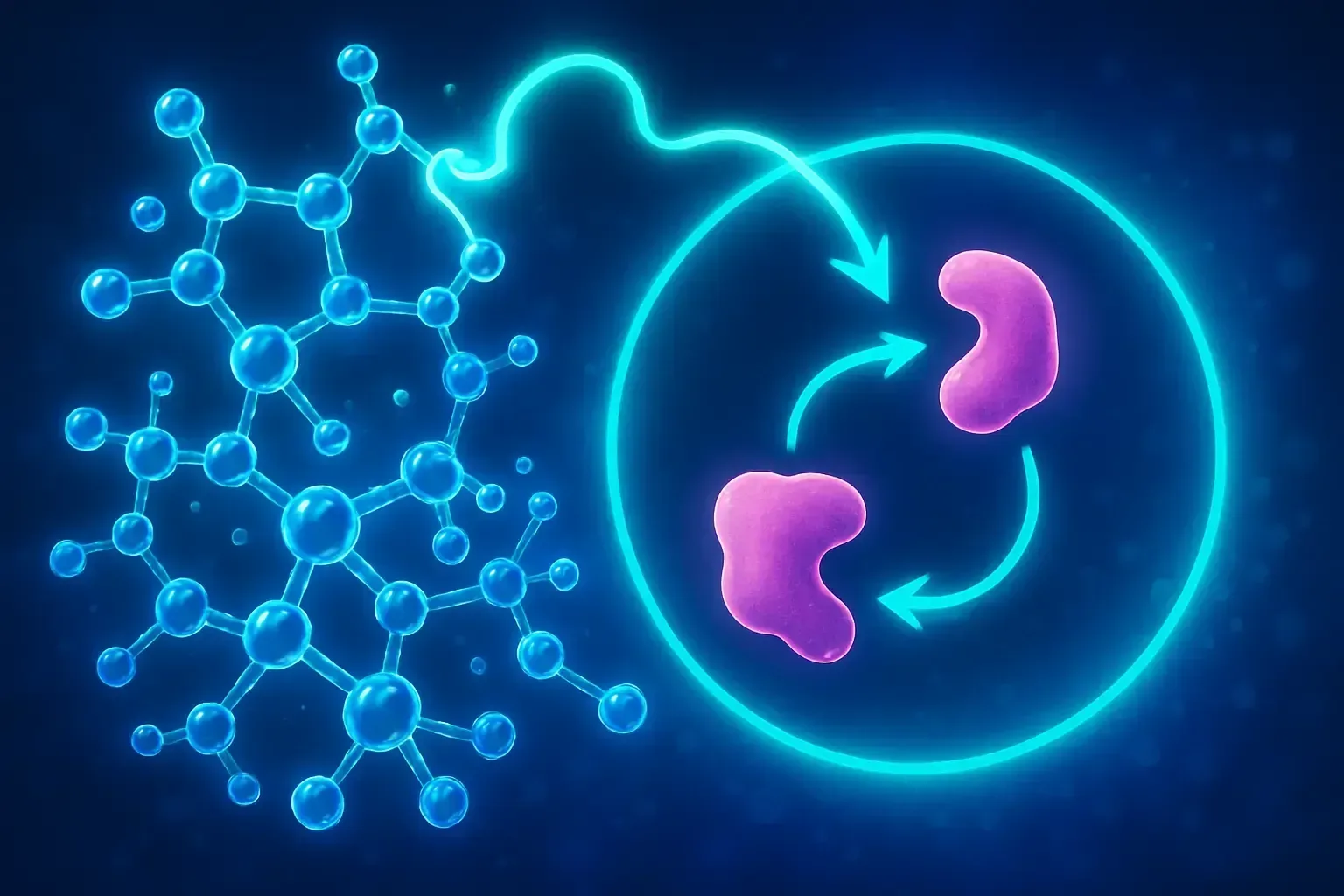
Some peptides act as hormones, help regulate the immune system, or support tissue repair.[1][2]
The Basic Chemistry of Peptides
A peptide is a chain of amino acids joined by peptide bonds.
Peptides usually have 2 to 50 amino acids. Chains with more than 50 amino acids can be classified as proteins, but true proteins have more complex tertiary and quaternary structure, so the boundary is not strict.[19] Insulin, with 51 amino acids, is still called a peptide.[11] That size matters because smaller chains can move and signal in different ways.
When two amino acids link, they make a dipeptide. Three make a tripeptide. Longer chains are called polypeptides. The order matters: change one amino acid, and the peptide can act very differently or stop working at all.
Your body makes peptides all the time. Insulin and oxytocin are peptides. Endorphins are peptides too. Antibodies also have peptide parts. These molecules carry signals between cells and help start responses.
Scientists also build peptides in the lab. Synthetic and research-use peptides are built from amino acids, but some include non-natural amino acids, such as D-amino acids, to extend half-life.[11] Ipamorelin, for example, is a pentapeptide containing Aib, D-2-Nal and D-Phe.[20]
Types of Peptides and Their Roles
Here are the main types of peptides and what they do.
Signal Peptides
These help cells know what to do. In the skin, some signal peptides are designed to stimulate collagen production.[3]
In molecular biology, a signal peptide is also a short sequence that sends a newly made protein to the right place in the cell. See our guide on how to identify signal peptides.
The cosmetics industry has invested heavily in signal peptides. Their effect depends on molecule size, formula, and how well they pass through the skin barrier.
Carrier Peptides
Carrier peptides move trace elements where cells need them. Copper peptides, for example, carry copper ions. In cell studies, the copper peptide GHK-Cu raised collagen production by fibroblasts.[4] Research on copper peptides goes back to at least 1988.[4] Our peptides for skin guide covers where they show up in skincare.
Enzyme Inhibitors
Some peptides block enzymes that break down structural proteins. Enzymes called matrix metalloproteinases (MMPs) break down skin collagen, and repeated UV exposure keeps them elevated.[5] A review of topical anti-aging peptides lists enzyme-inhibitor peptides as one of four groups.[6]
Neuropeptides
These peptides affect nerve signals. Substance P, released from sensory nerve endings, has been proposed to play a role in pain and chronic inflammation.[7] Endorphins are opioid peptides with complex effects on the amygdala, a brain region involved in emotion and pain.[8] Neuropeptide Y affects appetite and stress responses.[9] Researchers see these molecules as possible targets for treating pain.[8]
Medical Uses of Peptides
Banting and Best prepared the first effective insulin extract in 1921.[10] In 1922, insulin was purified enough for human use.[10] Natural and modified peptides have been studied as drugs across many areas of medicine.[11]
Some newer peptide drugs are built to last longer in the body; tirzepatide has a half-life of about five days.[12] The tirzepatide peptide and its structure show how a peptide with an attached fatty acid can be given by injection once a week.[12]
Growth hormone-releasing peptides (GHRPs) mimic the actions of ghrelin, and one of them, GHRP-2 (pralmorelin), markedly increases blood growth hormone levels in healthy subjects.[13] Medical interest in these compounds centers on growth hormone deficiency.[13] Using them outside approved medical uses creates legal and ethical issues, especially in sports.
Afamelanotide, a synthetic alpha-MSH analog also known as Melanotan 1, is a peptide drug used to manage erythropoietic protoporphyria, a disorder that causes painful reactions to sunlight.[14][15] See our breakdown of the Melanotan 1 tanning peptide and what the research shows.
Thymosin alpha-1, a natural peptide hormone, has been used in diseases where the immune system is weak or not working right.[2] Clinical trials have tested it in cancer, infections, and as a vaccine booster.[2]
Antimicrobial peptides have drawn interest as a source of new treatments for infections.[16] These molecules occur naturally and help the body fight infection.[16] They can kill microbes directly and can also shape the body's immune response.[16] Clinical use still faces issues with stability, delivery, and cost.
Chemical changes can help peptide drugs last longer.[17] Fatty acid conjugates and polyethylene glycol (PEGylation) are two ways researchers have extended peptide half-life.[17]
Are Peptides Safe?
Safety depends on the peptide, its source, its purity, and how it is used.
FDA-approved peptide drugs prescribed by doctors go through strict testing and quality checks. Research-grade peptides are not made or tested to drug standards for purity and sterility, so they are not approved for human use. Products from unregulated sources can differ in what they contain and in dose.[18]
Medical supervision is important for any peptide therapy. A clinician can track side effects, dose, and response.
The Research-Grade Distinction
Research-grade peptides are made for laboratory study, not clinical care. They do not meet the same standards as approved drugs. What the "research use only" label means in practice is covered in our guide to research-only peptides.
That market also changes fast. Peptide Sciences, once one of the largest research peptide vendors, has closed, and its name is easy to confuse with peptide science, the field of study. Our coverage of the Peptide Sciences shutdown explains what happened.
Can doctors prescribe research-grade peptides?
No. FDA has placed several research peptides, including ipamorelin, kisspeptin-10, GHRP-2 and GHRP-6, in Category 2, its list of bulk substances that may present significant safety risks in compounding.[21]
Using research chemicals outside a controlled lab can break federal rules and carries serious health risks. Products not made to drug standards can have impurities, the wrong dose, and harmful byproducts.
A few research suppliers publish more than a purity number. Our Peptidology review found each lot checked for sterility at two separate laboratories using two different methods, and a lot ships only when both come back clean. That is still documentation for laboratory material, not a pharmaceutical approval.
Making Informed Decisions About Peptide Use
Anyone thinking about peptide therapy should begin with medical advice. A healthcare provider can review the peptide, medical history, current medicines, blood work, and dose needs.
Product quality matters too. Pharmaceutical-grade peptides come through licensed medical channels with clear paperwork. Products from unregulated sources may not contain what the label says. Testing helps, but it adds cost.
Expectations should match the evidence. Peptides are not cure-alls. Strong evidence-based uses, such as insulin for diabetes, are very different from claims with little proof.
Cost also varies. Prescription peptide therapy through medical care usually includes monitoring and approved products. Cheaper unvetted options can lead to bigger costs if they cause side effects or do not work.
Source Quality Peptides with Confidence
If you are working with a qualified provider on peptide therapy, sourcing matters. Project Biohacking has partnered with peptide suppliers that provide certificates of analysis, third-party testing, and quality controls. Before choosing a supplier, see which companies we have reviewed in our peptide company directory.
Our peptide company rating methodology explains how we score each company. It weighs lab testing, ownership, and track record.
Save 15% with the Project Biohacking code PROBIO15 at each of these three suppliers:
- Limitless Biotech: code PROBIO15
- Biolongevity Labs: code PROBIO15
- CanLab International: code PROBIO15
Each store sets its own terms for the code, such as whether it comes off a sale price or works past a first order. The vendor rules behind peptide coupon codes explain why totals differ.
Talk with your healthcare provider before you use any peptide or supplement.
Affiliate Disclosure: Project Biohacking may receive commissions from purchases made through our links at no extra cost to you. Use all information and products at your own risk.
What Are Peptides FAQ
What is a peptide?
A peptide is a chain of amino acids joined by peptide bonds. It usually has 2 to 50 amino acids. Peptides act as signals in the body and tell cells what to do. Your body makes many peptides that help control hormones, support immune function, and aid tissue repair. Scientists also make synthetic peptides for medical, cosmetic, and research use.
What is the main difference between a peptide and a protein?
Size is the main difference. Peptides usually have 2 to 50 amino acids. Longer chains are usually called proteins and fold into more complex 3D shapes, though the cutoff is a convention, not a strict rule.[19] Peptides are usually simpler and do more focused jobs. Proteins do broader structural and body tasks, such as building muscle or carrying oxygen in blood.
Are peptides safe?
It depends on the peptide, its source, its purity, and its use. FDA-approved peptide drugs prescribed by doctors go through strict testing and quality checks. Research-grade peptides are sold for laboratory research and are not approved for human use. Products from unregulated sources may contain contaminants or the wrong strength, so medical supervision matters for any peptide therapy.
Can doctors prescribe research-grade peptides?
No. Research-grade peptides are made for laboratory study only and carry clear warnings against human use. FDA lists several research peptides, including ipamorelin and GHRP-2, as bulk drug substances that may present significant safety risks in compounding.[21] Peptides sold as research chemicals circulate outside standard medical oversight, with uncertain composition, dose, and stacking practices.[18]
How do peptides work in skincare products?
Molecules over about 500 daltons generally cannot pass the outer layer of skin.[22] Some, such as palmitoyl pentapeptide, were designed to stimulate collagen production.[3] Signal peptides help make collagen, carrier peptides move minerals such as copper to cells, and enzyme-inhibitor peptides slow the proteins that break down collagen. How well they work depends on molecule size, concentration, formula stability, and skin penetration, and clinical evidence differs a lot by peptide type.
Are skincare peptides as strong as prescription anti-aging treatments?
Usually not. Some skincare peptides, such as Matrixyl (palmitoyl pentapeptide) and copper peptides, may help fine lines, wrinkles, and skin repair. The human evidence includes a 12-week study of 93 women aged 35 to 55 that compared a moisturizer with and without a palmitoyl pentapeptide ingredient.[3]
What medical conditions can peptides treat?
Peptide drugs in medical use include insulin for diabetes and leuprolide and degarelix for prostate cancer.[11] Growth hormone is a 191-amino acid, single-chain polypeptide.[19] Scientists are researching other peptides for immune disorders, wound healing, and chronic inflammation, but these uses are mostly experimental. Many claims still lack strong human data.
How long before peptides show results?
Timing changes by peptide type and goal. In one randomized trial of a moisturizer containing palmitoyl pentapeptide, wrinkle and fine-line changes were assessed at 12 weeks, and the peptide product showed significant improvement compared with placebo.[3] Therapeutic peptides for medical use may work in days to weeks, depending on the condition. BPC-157 is popular among athletic populations for injury recovery, and the overall certainty of the human evidence was rated very low.[23] Genetics, health, dose, and how the peptide is given all influence the results.
Why does the exact amino acid sequence matter so much in a peptide?
The sequence sets the peptide's 3D shape, and the shape controls which receptors it can bind to. Changing one amino acid can alter how a peptide works. This is why peptides can have focused roles, such as hormone signaling, immune support, pain signaling, or tissue repair.
Why are injections often discussed with peptide therapies?
Many peptides are broken down by digestive enzymes before the body can absorb them, so oral use often fails. Injectable routes, especially subcutaneous or intravenous delivery, give higher absorption. Researchers are working on protective oral forms, nasal sprays, skin patches, and under-the-tongue delivery to improve stability and uptake.
What makes FDA-approved peptide drugs different from research peptides sold online?
FDA-approved drugs are tested for safety, effect, sterility, purity, dose, and manufacturing quality. Research-grade peptides are for lab work only and do not meet those drug standards. Third-party testing can confirm identity, purity, and sometimes concentration, but it does not make a product FDA-approved or safe for human use.
Why do some peptides need chemical changes before they work well as medicines?
Many natural peptides break down quickly because enzymes called peptidases cut them into amino acids. Chemical changes can make peptides more stable, improve receptor binding, slow clearance, and extend their time in the body. PEGylation and fatty-acid attachment, both covered above, are two common examples.
What are antimicrobial peptides, and why are researchers interested in them?
Antimicrobial peptides are part of innate immune defense. They can kill microbes directly and can also shape the body's immune response.[16] They matter more as antibiotic resistance grows, though clinical use still faces limits with stability, delivery, and cost.
Why is storage important for peptide products?
Peptides can lose potency under poor storage conditions. Some peptide products need refrigeration, freeze-thaw cycles can damage them, and mixed peptides may break down quickly. Proper storage slows breakdown and protects the product's strength. Our guide to peptide storage after reconstitution covers the details.
How could personalized medicine affect peptide therapy in the future?
People can react differently to the same peptide because of their genes, how active certain enzymes are, and how their bodies process these signals. As genetic testing and biomarker research improve, peptide therapy may be tailored to each person's biology and response.
What should someone check before considering any peptide therapy?
Start with medical advice. A healthcare provider can review the peptide, medical history, medicines, blood work, dose, and monitoring plan. Licensed medical channels should provide approved pharmaceutical-grade peptides, while unregulated products may be mislabeled, contaminated, or weak.
Why should peptide expectations match the evidence?
Peptides range from well-established medicines, such as insulin, to experimental compounds with limited human data. Some uses have strong clinical support, while others rely mostly on animal studies, early research, or user reports. Matching expectations to the evidence helps avoid overrating benefits or missing safety risks.
References
- Pickart L, Margolina A. Regenerative and Protective Actions of the GHK-Cu Peptide in the Light of the New Gene Data. Int J Mol Sci. 2018;19(7).
- Pica F, Gaziano R, Casalinuovo IA, et al. Serum thymosin alpha 1 levels in normal and pathological conditions. Expert Opin Biol Ther. 2018;18(sup1):13-21.
- Robinson LR, Fitzgerald NC, Doughty DG, et al. Topical palmitoyl pentapeptide provides improvement in photoaged human facial skin. Int J Cosmet Sci. 2005;27(3):155-60.
- Maquart FX, Pickart L, Laurent M, et al. Stimulation of collagen synthesis in fibroblast cultures by the tripeptide-copper complex glycyl-L-histidyl-L-lysine-Cu2+. FEBS Lett. 1988;238(2):343-6.
- Fisher GJ, Wang ZQ, Datta SC, et al. Pathophysiology of premature skin aging induced by ultraviolet light. N Engl J Med. 1997;337(20):1419-28.
- Gorouhi F, Maibach HI. Role of topical peptides in preventing or treating aged skin. Int J Cosmet Sci. 2009;31(5):327-45.
- Harrison S, Geppetti P. Substance p. Int J Biochem Cell Biol. 2001;33(6):555-76.
- Neugebauer V, Mazzitelli M, Cragg B, et al. Amygdala, neuropeptides, and chronic pain-related affective behaviors. Neuropharmacology. 2020;170:108052.
- Holzer P, Reichmann F, Farzi A. Neuropeptide Y, peptide YY and pancreatic polypeptide in the gut-brain axis. Neuropeptides. 2012;46(6):261-74.
- Hegele RA, Maltman GM. Insulin's centenary: the birth of an idea. Lancet Diabetes Endocrinol. 2020;8(12):971-977.
- Wang L, Wang N, Zhang W, et al. Therapeutic peptides: current applications and future directions. Signal Transduct Target Ther. 2022;7(1):48.
- Chavda VP, Ajabiya J, Teli D, et al. Tirzepatide, a New Era of Dual-Targeted Treatment for Diabetes and Obesity: A Mini-Review. Molecules. 2022;27(13):4315.
- Pralmorelin: GHRP 2, GPA 748, growth hormone-releasing peptide 2, KP-102 D, KP-102 LN, KP-102D, KP-102LN. Drugs R D. 2004;5(4):236-9.
- Chawathe A, Sharma N. Investigation of the stability profile of therapeutic α-MSH analogue: Insights from liquid chromatography-high resolution mass spectrometry analysis of afamelanotide. J Pharm Biomed Anal. 2026;272:117362.
- Langendonk JG, Balwani M, Anderson KE, et al. Afamelanotide for Erythropoietic Protoporphyria. N Engl J Med. 2015;373(1):48-59.
- Mookherjee N, Anderson MA, Haagsman HP, et al. Antimicrobial host defence peptides: functions and clinical potential. Nat Rev Drug Discov. 2020;19(5):311-332.
- Wijesinghe A, Kumari S, Booth V. Conjugates for use in peptide therapeutics: A systematic review and meta-analysis. PLoS One. 2022;17(3):e0255753.
- Dominikowski A, Rękoś Z, Olejarz M, et al. The emerging landscape of performance-enhancing peptides modulating GH-IGF1 axis: bridging the gap between clinical evidence and patient self-administration. Front Endocrinol (Lausanne). 2026;17:1822475.
- Yovich JL, Regan SLP, Zaidi S, Keane KN. The Concept of Growth Hormone Deficiency Affecting Clinical Prognosis in IVF. Front Endocrinol (Lausanne). 2019;10:650.
- Raun K, Hansen BS, Johansen NL, et al. Ipamorelin, the first selective growth hormone secretagogue. Eur J Endocrinol. 1998;139(5):552-61.
- U.S. Food and Drug Administration. Certain Bulk Drug Substances for Use in Compounding that May Present Significant Safety Risks. Accessed October 21, 2026.
- Bos JD, Meinardi MM. The 500 Dalton rule for the skin penetration of chemical compounds and drugs. Exp Dermatol. 2000;9(3):165-9.
- Poolton JT, Minett J, Kazmi A. Human evidence for BPC-157 in orthopaedic and regenerative medicine: a systematic review of efficacy and safety. Acta Orthop Belg. 2026;92(3).
About the Author
Jeff Nunn is the founder of Project Biohacking. With over 30 years of biohacking practice, he applies decades of self-experimentation methodology to peptide research, dosing math, and vendor evaluation.
Important Disclaimer: The content on Project Biohacking is for educational and informational purposes only and is not intended as medical advice, diagnosis, or treatment. Always consult a qualified healthcare professional before making any changes to your health regimen, starting new supplements, peptides, or protocols. Nothing on this site establishes a doctor-patient relationship, and you use the information at your own risk. Research compounds discussed here are sold for laboratory research purposes only and are not approved for human or veterinary use or consumption.