Bacteriostatic Water for Peptides Guide

By Jeff NunnPublished · Updated · 9 min read
Bacteriostatic water for peptides, often called bac water, is sterile water with 0.9% benzyl alcohol. It is the usual choice for peptide reconstitution because the preservative helps keep a mixed vial safer during repeat use. This guide covers what bacteriostatic water is, how it compares with sterile water, how to reconstitute peptides with it, where to buy bacteriostatic water, and how long it lasts after opening.
- Made for multi-dose vials
- Contains 0.9% benzyl alcohol
- Works best with clean stoppers and new needles
- Throw it out if it looks cloudy, discolored, or is past 28 days from first puncture
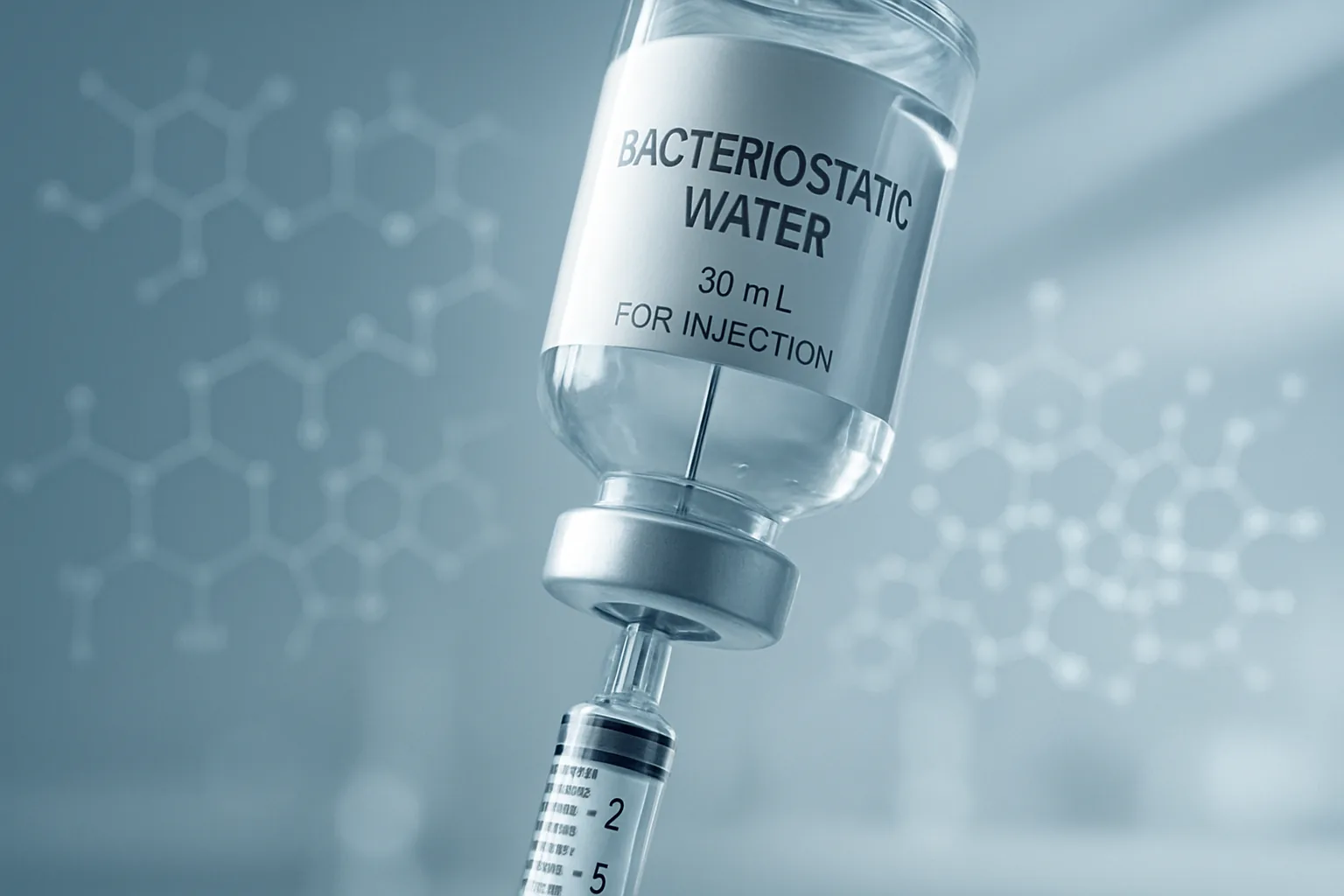
What is bacteriostatic water?
What is bacteriostatic water? It is sterile water for injection with benzyl alcohol added as a preservative, most often at 0.9%. The preservative slows bacterial growth in a vial that will be opened more than once, which is why it comes in multiple-dose vials.
The simple formula suits most peptides and keeps the mix easy to work with. For most lab handling, bacteriostatic water for peptides is the default choice.
Why it matters for peptide reconstitution
Peptides usually arrive as freeze-dried (lyophilized) powder and must be mixed with liquid before use. Once mixed, the vial becomes a multi-dose container that may be opened again and again over days or weeks.
Each needle pass can bring in bacteria. A peptide solution with no preservative can support that growth at room temperature or in the fridge, and a contaminated mix can cause local abscesses or wider infection if it is injected.
The benzyl alcohol in bacteriostatic water slows that growth. That is why it sits at the center of peptide reconstitution best practices.
Benzyl alcohol in bacteriostatic water
Most bacteriostatic water carries 0.9% benzyl alcohol. Some manufacturers make a 1.1% version, and the label states which one you have.
At the small volumes involved in peptide work, often 0.1 to 0.5 mL at a time, benzyl alcohol exposure is small, and most adults tolerate it well.
Bacteriostatic water vs sterile water
- Bacteriostatic water has benzyl alcohol and is made for repeated use.
- Sterile water for injection has no preservative and is meant for single, immediate use.
- If sterile water is used for a multi-dose vial and stored, contamination risk rises fast.
- For most peptide work, bac water is the safer and more practical choice.
If sterile water is used, use the solution immediately and discard what is left; do not store it, even in pre-filled syringes.
Bacteriostatic saline vs bacteriostatic water
Bacteriostatic saline has 0.9% sodium chloride plus 0.9% benzyl alcohol. A few products name it in their mixing instructions.
For most peptides, plain bacteriostatic water is the better default. Salt can change how some peptides dissolve or stay in solution, so always check the product's mixing notes first.
For common examples such as BPC-157, TB-500, and Ipamorelin, bacteriostatic water is the usual reconstitution solution.
How to reconstitute peptides with bacteriostatic water
These peptide reconstitution best practices keep the process clean. Our step-by-step peptide reconstitution walkthrough covers mixing a vial with bacteriostatic water in more detail.
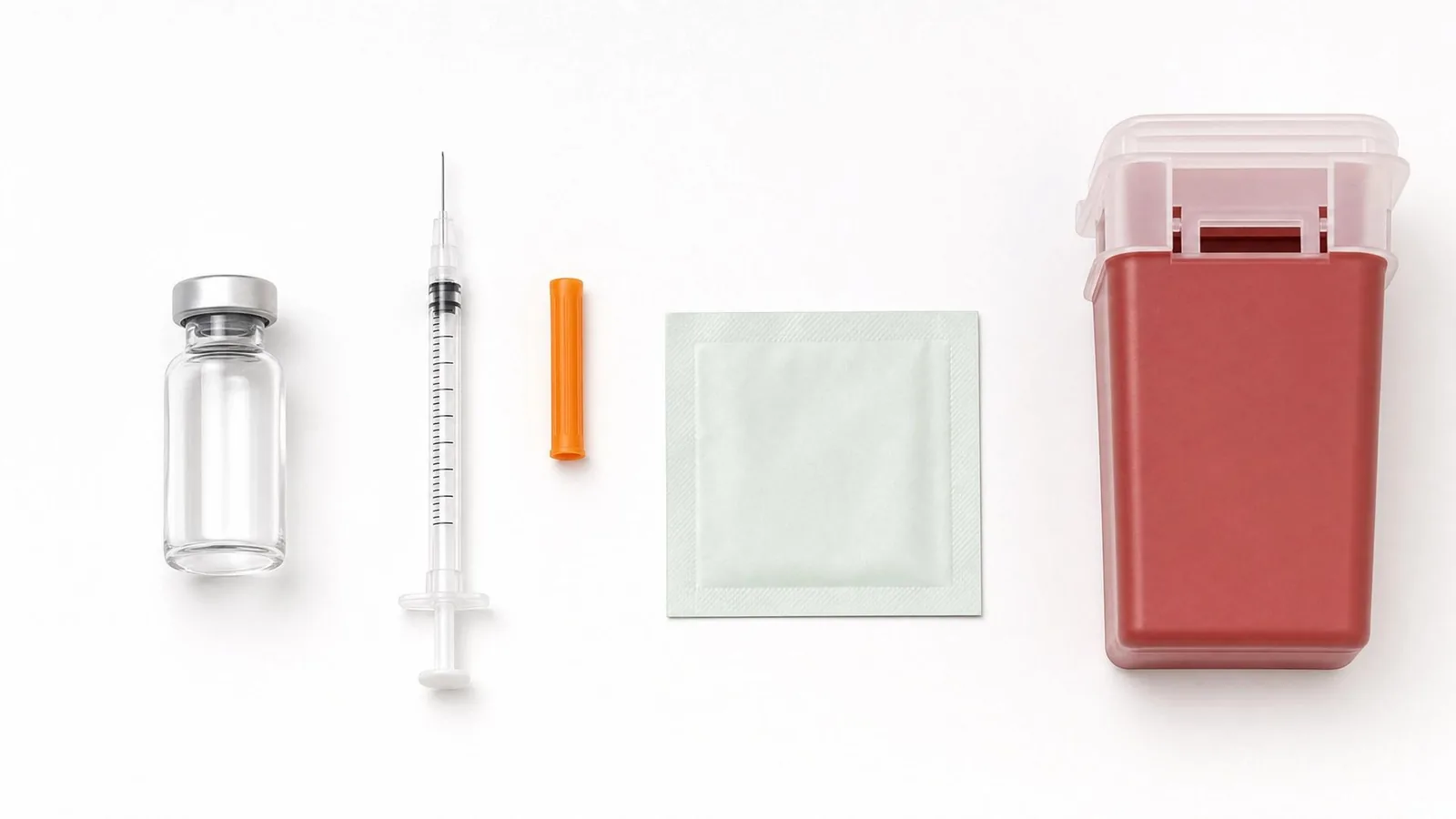
Supplies needed
- Bacteriostatic water vial
- Peptide vial
- Syringe for drawing water
- Sterile needle
- Alcohol wipes
- Clean work space
Step-by-step mixing
- Wash your hands well. Let a cold peptide vial warm to room temperature for 15 to 30 minutes.
- Wipe each rubber stopper with an alcohol wipe and let it dry.
- Draw air into the syringe, then draw the amount of bac water you need.
- Run the water down the side of the peptide vial, not hard onto the powder.
- Do not shake the vial. Gently swirl or roll it instead.
- Let the powder dissolve fully until the liquid is clear.
- Label the vial with the mix date, the water volume used, and the final concentration.
The amount of water sets the final strength of the mix. More water makes a weaker solution with a larger draw volume. Less water makes a stronger solution with a smaller draw volume. Measure exactly, because a small error in water volume changes every draw from that vial.
Turning the milligrams on a vial label into micrograms per dose takes one more step. Our peptide dosage math explained guide walks through the mg-to-mcg conversions.
Dosing and concentration
A simple peptide reconstitution calculator can work out syringe units, draw volume, and final concentration for you. It saves doing the conversion by hand for each new vial.
Different calculators can give slightly different answers from the same numbers. Our explainer on how peptide calculators round and convert units shows where those gaps come from.
Concentration is the amount of peptide in each milliliter of liquid, and it sets how much you draw for a dose. Peptide concentration 101 explains how the water volume sets it. Our PT-141 dosage guide works through the same math for one peptide.
Storage and how long it lasts after opening
Unopened vials can stay at room temperature in a clean, dry place away from sunlight until the manufacturer's expiration date.
Once opened, the standard rule is 28 days after first puncture. USP chapter 797 sets that limit for opened multiple-dose vials unless the manufacturer states otherwise. Discard the vial at 28 days.
Refrigeration may help once a vial is open, though room temperature storage is acceptable within the manufacturer's stated timeframe. Before each use, check that the liquid is crystal clear. Throw it out if you see cloudiness, color change, floating particles, or a damaged stopper.
Always label the vial with the date of first puncture so you can track the time clearly.
A mixed peptide vial has its own storage needs, separate from the water's. Our guide to peptide storage after reconstitution covers labeling, where to keep the vial, and what a visual check can and cannot tell you.
Safety notes
Most adults do well with bacteriostatic water at the small volumes used in peptide work. Mild burning at the injection site can happen, especially if the solution is cold, which is why a cold vial is warmed to room temperature first.
Technique matters as much as the liquid. Our guide on how to inject peptides covers subcutaneous versus intramuscular injection, choosing and rotating sites, and common mild reactions.
Allergic reactions to benzyl alcohol have been reported. Signs include hives, swelling, or breathing trouble. If that happens, stop and get medical help.
Bacteriostatic water is labeled not for use in newborns (neonates). Benzyl alcohol can be toxic to newborns and premature infants.
Poor sterile technique causes more trouble than the water itself. Clean the stopper, use fresh needles, and do not reuse anything that has been contaminated.
Anyone who is pregnant or breastfeeding should talk with a clinician before using peptides or any mixed solution.
Medical and lab use
Hospitals, clinics, research labs, and veterinarians rely on the same principle: a preserved multi-dose vial is safer for repeat access. The rule applies whether the vial holds antibiotics, vaccines, or peptides.
That is one reason bacteriostatic water is so common in medical and laboratory work. The same simple handling rules that protect a clinic vial protect a research vial.
Where to buy bacteriostatic water
Look for sealed vials from online medical suppliers, compounding pharmacies, some regular pharmacies that special-order supplies, and reputable peptide sellers.
Check for:
- Bacteriostatic Water for Injection, USP, on the label
- Benzyl alcohol concentration listed (usually 0.9%)
- An intact flip-off cap and rubber stopper
- A clear expiration date
- No damage in shipping
Vials are sold in sizes such as 10 mL and 30 mL. Avoid suspiciously cheap products from unknown sources.
Several of the peptide vendors we cover also sell bacteriostatic water, so it can ship in the same order as the vial it will be mixed with. They are listed alongside the other companies we have looked at in our research peptide vendor directory.
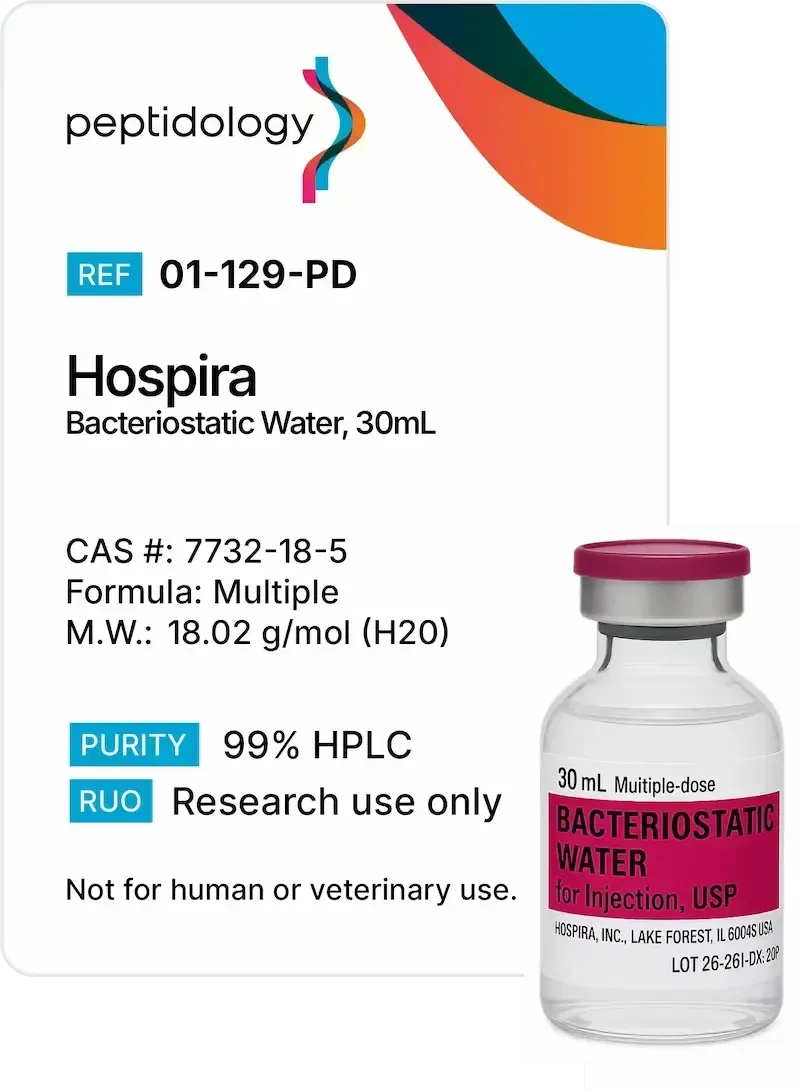
Hospira bacteriostatic water
Hospira bacteriostatic water is a well-known pharmaceutical-grade option, sold in 30 mL multi-dose vials under the Hospira name, now part of Pfizer. It is not the only good one. Any properly made USP-grade bac water with the stated benzyl alcohol concentration does the same job.
Brand name matters less than sterility, the right strength, and good storage.
Peptidology sells bacteriostatic water alongside its peptides, listed as Reconstitution Solution, 0.9% Benzyl Alcohol, in 10 mL and 30 mL vials. The Project Biohacking code PROBIO15 takes 15 percent off at peptidology.co, and our discount code for Peptidology page records the date of our latest checkout test.
This page may contain affiliate links. Availability may vary.
Bacteriostatic Water FAQ
What is bacteriostatic water and why do I need it for peptides?
Bac water is sterile water with benzyl alcohol, usually 0.9%. It slows bacterial growth in a multi-dose peptide vial, so the mixed solution stays safer during repeat use.
Can I use tap water or sterile water instead?
Not tap water, which is not sterile. Plain sterile water has no preservative and is meant for immediate, single use only.
How long does bacteriostatic water last after opening?
Discard it 28 days after first puncture, the USP standard for opened multi-dose vials, unless the manufacturer states otherwise. Toss any vial that looks cloudy or discolored sooner.
What should I check before buying bacteriostatic water for peptides?
Look for Bacteriostatic Water for Injection, USP, a listed benzyl alcohol concentration, a sealed vial with an intact flip-off cap, and a clear expiration date.
Does the amount of bacteriostatic water change concentration?
Yes. More water means a weaker solution and a larger draw volume. Less water means a stronger solution and a smaller draw volume.
Is Hospira required?
No. Hospira is well known, but any properly made USP-grade bac water works.
About the Author
Jeff Nunn is the founder of Project Biohacking. With over 30 years of biohacking practice, he applies decades of self-experimentation methodology to peptide research, dosing math, and vendor evaluation.
Important Disclaimer: The content on Project Biohacking is for educational and informational purposes only and is not intended as medical advice, diagnosis, or treatment. Always consult a qualified healthcare professional before making any changes to your health regimen, starting new supplements, peptides, or protocols. Nothing on this site establishes a doctor-patient relationship, and you use the information at your own risk. Research compounds discussed here are sold for laboratory research purposes only and are not approved for human or veterinary use or consumption.